
 EN
EN

How Costume Shops Personalize Dance Costumes with Logos
Core Techniques: Sublimation, CAD-Cut Vinyl, and Tackle Twill
For the logos on dance costumes, professional costume stores utilize three reliable techniques, chosen primarily for how they perform, rather than how they look. Sublimation printing uses heat to infuse dye into synthetic materials, creating a design that is seamless and stretchable, and will not crack or peel. Vinyl CAD (Computer-Aided Design) is a method where graphics that are backed by an adhesive are cut, and then applied. This vinyl is very conforming, and it performs well on curved seams and areas that are subject to a lot of movement. Tackle twill is a method that uses layered fabric appliqué that is building, and then stitch that is reinforced to create an exceptional logo that is very durable for static, and low-stretch uses.
Method Best For Durability Flexibility
Sublimation Full-color gradients, all-over prints Excellent High
CAD-cut vinyl Crisp geometric shapes, bold lettering Very good Medium
Tackle twill Traditional emblems, team insignia Exceptional Low
To create a logo that will be aesthetically pleasing and not compromise the performance of the costume, these methods are used to eliminate excess bulk, preserves, and mobility. This is particularly important, as lack of mobility contributes to a high percentage of injuries, with 72% of dancer injuries occurring as a result of restricted motion, according to the 2023 Performing Arts Safety Report.
Most costume stores do not use any kind of embroidery for performance dance costumes.
Raised embroidery can affect performance of the costume for its intended purpose. While dancing, the range of motion can be impeded due to the embroidery as the dense placements of threads can reduce the elasticity in the fabric. This can affect mobility during jumps, turns and leaps. Embroidery can overwhelm the costume with the added bulk, leading to the dancer overheating and suffering from chafing as they are dancing. Embroidered threads also break when the costume's blended fabric is stretched over a certain point, which can happen frequently in choreography. Professional costume stores use alternative methods that won't affect the material's integrity.
Customization and Compatibility of fabrics and Logos
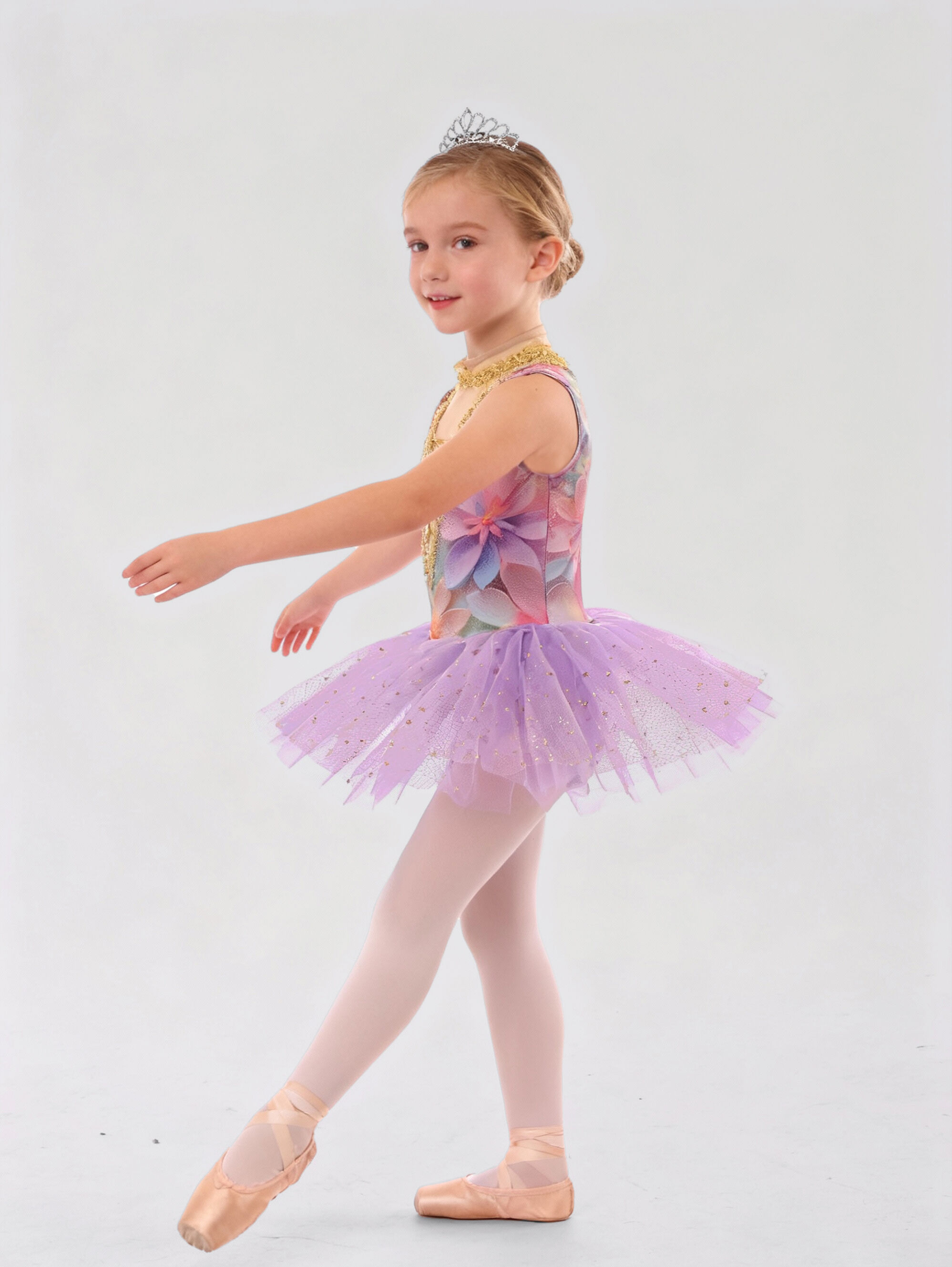
When looking at fabrics, a majority of dance costumes are made using a polyester and spandex blended fabric. This fabric offers the best elasticity and also helps in the moisture-wicking department as well to keep the dancers dry. Also, from a design element, the fabric is great for customization. The fabric is ideal for processes that require heating as the vinyl and the colors that sublimate with the use of heat work perfectly with the fabric. The two processes can give a dancer a costume that is customized and has the best design. The fabric not only moves with the design, but also helps the costume stay functional during performance.
The same drawback for rhythmical dance movements is that methods that involved needles had difficulties. Embroidery would pucker thin polyester-spandex substrates and repeated embroidering could loosen or snap the stitches that were made. In the same manner, the structure of tackle twill is rigid and does not allow for dynamic movements which increases the risk for peeling at stress points, such as the underarm and knees. Consequently, professional costume designers will only embroider in areas that do not experience a lot of stress, like the waistband and the back neckline, and will do screen printing for the main logo.
This results in the following:
Sublimation printing is ideal for competition uniforms because they allow for full bleed designs
Vinyl printing is great for rehearsal wear because it is assertively visually bold
Tackle twill is limited to studio branded or ceremonial pieces where the stretch is not significant
The demands of a performance will change the decision on what technique to use that will protect the functional design of the garment.
The End to End Customization Workflow at a Professional Costume Store
Professional costume designers get logos to enhance a dance performance in a disciplined two-phase workflow. This process integrates a fully developed creative vision, married with the biomechanic reality grounded from their experience with competitive dance teams, choreographers and coaches.
Step 1: Digital Mockup and Fit Driven Logo Positioning
The dance costume designer starts with a digital mockup in a 3D simulation software where they can map the logo proportions, sizes, and positions to the anatomical landmarks and movement arcs. This part of the process considers the visibility of the logos during lifts, extensions and work on the floor while avoiding high flex zones like the shoulders, elbows and the hips. A part that has not been placed well is said to lack in articulation and accounts for 78% of costume failures in studies done. The virtual fitting process allows designers to do adjustments for size, and their logos ensure that they are centered and clearly visible as the costume is moving, and not only when the costume is in a static position.
Step 2: Fabric Specific Method Selection & Production Handoff
Once the mockups are approved, the technicians identify the exact fiber construction and composition of the garment and the most suited application method. For polyester-spandex blends, sublimation is used for all-over full-color prints, CAD-cut vinyl is utilized for single-color logos that need a faster turnaround, and tackle twill is used for more constructed jackets or warm-up pieces. These selections are made with production timelines in mind as vinyl applications take 48 hours and sublimation can take up to 72 hours as a more complex order. Decisions are made with technical tolerances in mind like seam allowance, and hem depth. These specifications are recorded on production tickets to standardize and eliminate scaling errors during batch production.
An Overview on Collaborating with a Costume Shop for Logo Customization
When creating custom dance costumes from a professional costume shop, you enter into a relationship that is collaborative rather than a transactional print shop. The process is initiated with mockups that demonstrate the logo in relation to the seam lines, darts, and movement vectors. This is a critical step as 67% of the design revisions are due to spatial concerns (Dancewear Manufacturing Report 2023). A costume shop will be able to determine design flaws for a dance costume, where as other places that offer embroidered logos will not. Costume shops will catch issues like a vinyl cut that is too large and will impede shoulder rotation or suggest that for a high kick a sublimation application is more appropriate than tackle twill.
You will be given realistic timelines-order turnaround is expected between 2-4 weeks for 20+ units- which are typically delayed due to later stage edits on artwork rather than hold-ups in production. Specific practice partners will offer to provide color approved pre production sample fabric swatches to test color accuracy, degree of stretch, and how the logo holds up when pulled. Along the way expect multiple rounds of communication for adjustments- design team may ask for a different logo placement based on how it may will move for a good or be stronger in a different way to make it a design lose for a new method. This method overall will most minimize the potential need for reworks and ensure the logos last as long as the dancer.
FAQ
Why is sublimation the preferred method for poly-spandex dance costumes?
Polyester spandex blends are preferred for sublimation because a photos realistic bright logo can be achieved that amalgamates to the fabric and maintains original stretch and flexibility.
What are the most common types of customization for logos on dance costumes?
For logos on dance costumes the most common types of customization are sublimation, CAD cut vinyl, and tackle twill, which each serve to different degrees of adhesion or flexibility.
Can performance dance costumes have embroidery?
Embroidery is not recommended for performance dance costumes as it is inhibitive to fabric elasticity and can alter the dancer's range of motion. Instead techniques like CAD and vinyl to be surface rather sedentary techniques are preferred on costumes.
What are the different types of customization methods available?
The types of customization methods available have a respective utility and range, which are dependent on fabric, application, design, and performance.