
 EN
EN


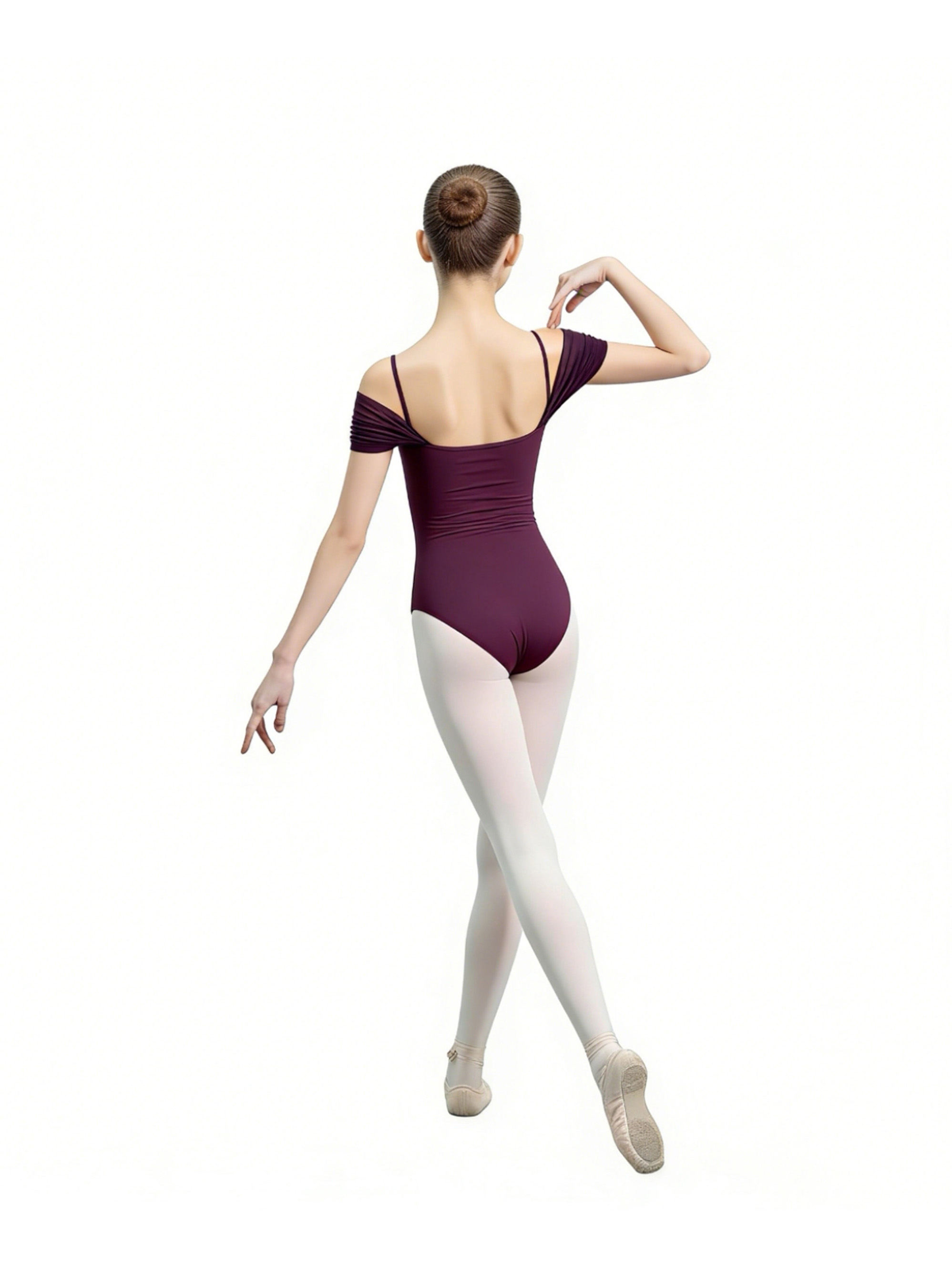
Fabric Selection for High-Movement Dance
Jazz dance demands fabrics that stretch, recover, breathe, and survive — all within a single three-minute routine. A jazz costume made from the wrong fabric blend loses shape by the second performance, traps heat, and restricts movement. The fabric decision is functional, not aesthetic. Two stretch-knit constructions dominate: nylon-spandex and polyester-spandex, each with distinct performance trade-offs.
Nylon-Spandex vs Polyester-Spandex — Stretch, Recovery, and Moisture Management
Nylon-spandex (typically 80/20 or 85/15 blend) provides superior softness, drape, and four-way stretch recovery — critical for jazz choreography involving high kicks, leaps, and floor work. Nylon absorbs 4% to 4.5% of its weight in moisture, giving a cool hand-feel but drying slower than polyester. Polyester-spandex (82/18 or 88/12) wicks moisture to the surface — polyester absorbs under 0.5% — making it better for dancers sweating under stage lighting. The trade-off: polyester-spandex feels less supple and pills after 30 to 40 wash cycles unless the yarn is filament-grade. The ideal jazz costume uses nylon-spandex for comfort with polyester-spandex mesh panels in high-sweat zones — underarms, back, waistband.
Real-World Case — A Competition Team's Fabric Upgrade
A competitive jazz dance team from Canada performing 12 routines across a three-day national competition experienced costume failure with 100% polyester costumes: seam slippage at the crotch gusset on four of eight costumes, visible sweat staining after the second routine, and fabric pilling on hip areas from floor-contact choreography. The team switched to ANNASHI (SHAOXING AIDENG GARMENTS), a dance costume manufacturer producing OEM and ODM garments since 2007 with clients across Europe, North America, and Australia. ANNASHI specified 82% nylon / 18% spandex milliskin tricot for the body — 210 g/m² for opacity under stage lighting — with polyester-spandex power mesh at the back and underarm panels. Flatlock stitching replaced overlock on load-bearing seams. After the redesign, zero seam failures occurred across the next season, and the team reported visibly drier costumes between routines.
Construction Details That Survive Performance Stress
Reinforced Seams, Gussets, and Closure Security Under Dynamic Load
A jazz costume experiences load peaks that casual athleisure never encounters: a grand jeté landing generates forces exceeding 3× body weight on the crotch seam; fast turns stress shoulder seams through centrifugal arm extension. Four details separate performance-grade from practice-wear. First, flatlock or coverstitch seams on all load-bearing joinery — crotch, shoulder, side — distribute tension across four or five thread lines. Second, a diamond crotch gusset eliminates the four-way seam intersection where most failures initiate. Third, zippers must have locking sliders with a fabric guard behind the tape. Fourth, elastic edging on leg and arm openings must be 8 to 10 mm wide with a silicone grip strip to prevent ride-up during floor work.
Visual Impact and Stage Presence
Color Fastness, Embellishment Durability, and Lighting Considerations
Stage lighting changes how a jazz costume reads to judges. Fabric vibrant under workshop fluorescent can wash out under 5,600 K follow spots or shift color under LED PAR cans with dominant blue or magenta wavelengths. Color fastness to light — per ISO 105-B02 — should reach rating 4 to 5 for competition costumes accumulating 50 to 80 hours of stage exposure per season. Embellishments must survive centrifugal force during turns: heat-fixed rhinestones with bond strength above 2.5 kg/cm², sequins stitched with double-thread chain stitch, fringe strips sewn into seams rather than surface-applied. A detached rhinestone distracts; a detached fringe strip is a trip hazard.
Sizing Consistency for Group Performances
Size Grading, Stretch Allowance, and Custom Measurement Protocols
Group jazz performances require visual uniformity across dancers of different builds. Size grading that simply scales a medium pattern by 4% per size fails when the fabric has 75% to 100% stretch — the grading must account for negative ease, where the garment circumference is smaller than the body measurement to create the compression fit. A size medium with 80 cm chest circumference negative ease of -8 cm means the garment measures 72 cm flat but stretches to fit an 80 cm body. Custom measurement protocols — requiring bust, waist, hip, girth, and inseam per dancer rather than generic S/M/L selection — reduce fit variance in a group from visible inconsistency to professional uniformity. ANNASHI offers OEM and ODM services with custom sizing, enabling dance studios and competition teams to order costumes matched to individual dancer measurements rather than off-the-rack sizing.
Frequently Asked Questions
What fabric is best for jazz dance costumes?
An 80/20 or 85/15 nylon-spandex blend (210 g/m² milliskin tricot) provides optimal stretch recovery, softness, and opacity for jazz performance costumes. Polyester-spandex offers better moisture wicking but less supple drape. ANNASHI produces costumes in both fabric types based on performance requirements.
How should jazz costumes be reinforced for high-energy routines?
Jazz costumes require flatlock seams on all load-bearing joinery, a diamond crotch gusset, locking sliders on zippers, and 8 to 10 mm elastic edging with silicone grip strips. These four details prevent the seam failures common in standard-construction dancewear.
Why do some jazz costumes look different under stage lights?
Fabric dye interacts with stage lighting wavelengths differently than with workshop lighting. A jazz costume needs an ISO 105-B02 color fastness rating of 4 to 5 to maintain visual consistency through a competition season of 50+ hours of stage exposure.
How should rhinestones and sequins be attached to jazz costumes?
Heat-fixed rhinestones with bond strength above 2.5 kg/cm², double-thread chain-stitched sequins, and seam-inserted fringe strips survive the centrifugal forces of jazz turns. Glue-only application fails within 3 to 5 performances.
How are group jazz costumes sized for visual uniformity?
Group jazz costumes require individual dancer measurements — bust, waist, hip, girth, inseam — and negative-ease grading that accounts for fabric stretch. Generic S/M/L sizing produces visible fit variance across dancers of different builds.
How many performance hours can a jazz costume withstand?
A professional-grade jazz costume with reinforced construction survives 80 to 120 hours of performance use before seam fatigue, elastic degradation, or color fading become visible. Costumes should be inspected after every 20 hours of use for early-wear signs.