
 EN
EN

Four Tutu Silhouettes That Define Classical Ballet's Visual Language
Every ballet teacher knows the moment: a young dancer puts on a properly constructed tutu for the first time, stands taller, and moves differently. The costume does not just dress the performance — it shapes posture, enforces turnout, and transforms how the dancer relates to the space around her. For kids costumes in classical ballet, the tutu is not decorative; it is functional architecture.
The professional ballet costume vocabulary includes four distinct tutu silhouettes, each engineered for specific repertoire requirements. Choosing the wrong silhouette for a given piece undermines the choreography's visual intent and can physically interfere with partnering, floor work, or the line quality that adjudicators evaluate in competition settings.
Pancake Tutus: The Iconic Classical Silhouette
Structural Engineering Behind the Flat Profile
The pancake tutu — flat, stiff, projecting horizontally from the hip — defines the visual identity of classical ballet. Constructing one requires up to 12 individually cut and stiffened layers of high-density tulle, each layer hand-positioned to create even volume distribution. A specialized stiffening agent, applied to each tulle layer before assembly, preserves the flat profile through repeated performances without the drooping that occurs when untreated tulle absorbs atmospheric moisture.
The bodice of a classical kids costumes pancake tutu incorporates flexible boning — typically spiral steel or synthetic whalebone — encased in soft fabric channels. For children's sizes, lighter boning materials and reduced boning count (6 to 8 channels versus 10 to 12 in adult sizes) maintain structural support without restricting a young dancer's developing ribcage expansion during sustained exertion. The basque — the fitted section between bodice and skirt — sits precisely at the natural waist to create the elongated torso line central to classical aesthetic.
When Pancake Tutus Are Appropriate
Pancake tutus belong in classical repertoire: the Sugar Plum Fairy variation from The Nutcracker, Aurora's Act I entrance in The Sleeping Beauty, or any corps de ballet piece requiring uniform, regimented visual impact. For competition solos drawn from classical variations, adjudicators expect the pancake silhouette — a romantic tutu in a classical variation signals either inexperience or budget constraints.
Romantic Tutus: Flowing Lines for Lyrical Expression
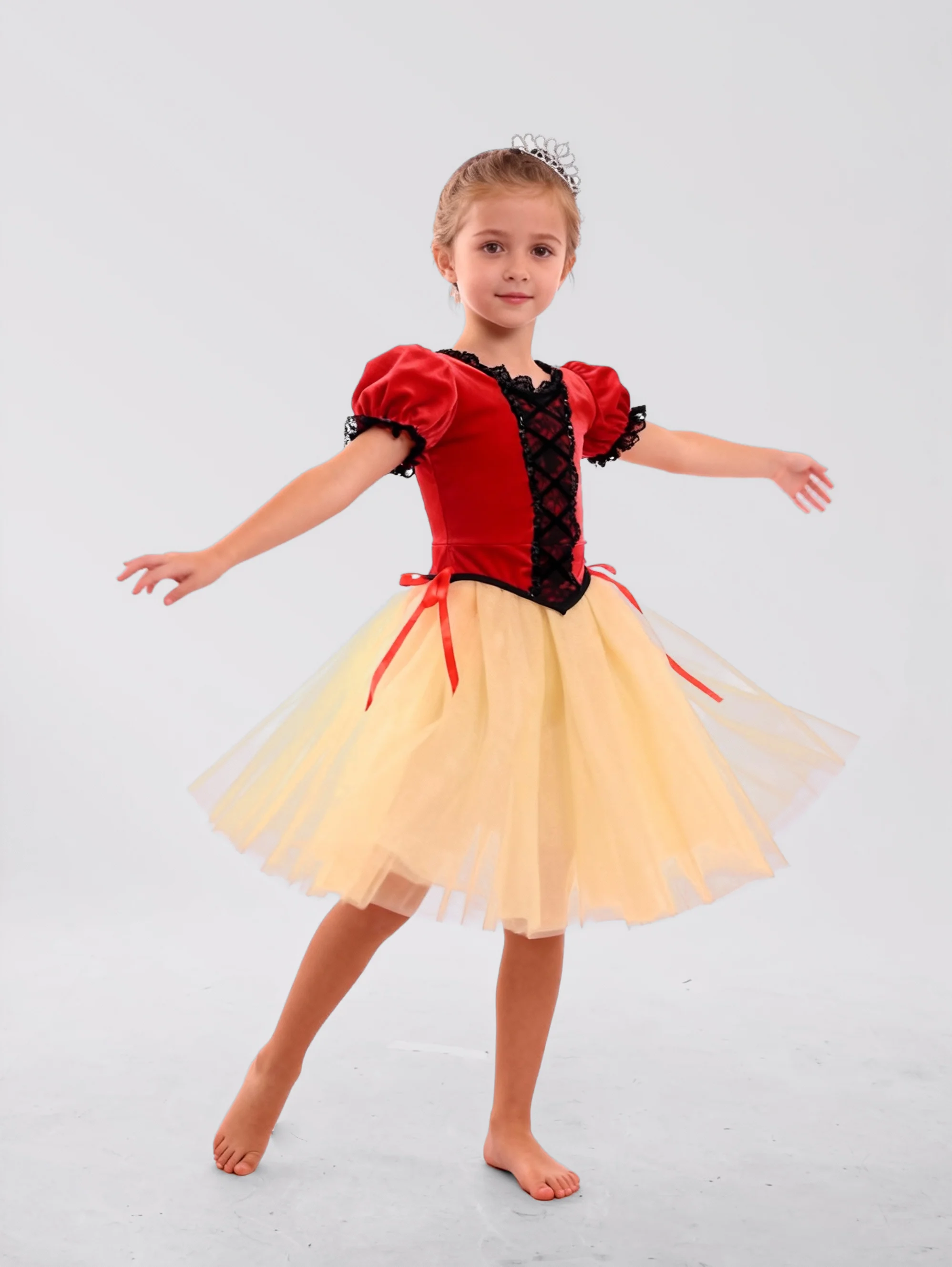
The romantic tutu — also called the ballet skirt or Degas skirt — drops from the waist to mid-calf in soft, flowing layers of tulle without stiffening treatment. This silhouette serves the lyrical ballet repertoire: Giselle Act II, La Sylphide, and Les Sylphides. The length, falling between knee and ankle on children, creates an ethereal quality during jumps and lifts, the fabric trailing the dancer's trajectory and extending the visual line beyond the body's physical limit.
For kids costumes, romantic tutus offer practical advantages: lighter weight than pancake constructions, easier packing and transport, and greater tolerance for growth between fittings. A well-constructed romantic tutu with an adjustable waistband elastic — as produced by SHAOXING AIDENG GARMENTS — accommodates 3 to 5 cm of growth without requiring replacement, making it the more economical choice for growing dancers.
A competitive dance academy in London preparing its junior company for a Coppélia excerpt opted for romantic kids costumes with three graduated tulle layers over a satin base skirt. The adjustable waistbands, combined with bodices constructed from nylon-spandex with 12% spandex content, accommodated dancers spanning two size categories within a single order batch. The costumes survived three competition weekends without a single seam repair or tulle tear.
Platter and Practice Tutus: Specialized Alternatives
Platter tutus offer a wider, flatter profile than pancake styles, projecting further from the hips with a slightly downward angle. These serve character dance repertoire and certain Balanchine works where the broader silhouette reads clearly from balcony seating in large theaters.
Practice tutus — shorter, lighter, with 4 to 6 layers of untreated tulle — fill the gap between rehearsal wear and performance costume. For studios that require costume-approximate silhouettes during technical run-throughs, practice tutus provide the physical feedback of a full skirt without the fragility or cost of performance-grade construction. Sizes range from children's XS to adult XXL, with age-appropriate proportions ensuring younger dancers wear garments designed for developing bodies rather than scaled-down adult patterns.
Frequently Asked Questions
What is the difference between a pancake tutu and a romantic tutu?
Pancake tutus project horizontally from the hip with stiffened tulle layers (up to 12) that hold a flat, rigid shape, used in classical variations. Romantic tutus fall to mid-calf in soft, unstiffened layers, used in lyrical ballet repertoire like Giselle. The construction difference — stiffened versus flowing — reflects the choreographic era and movement vocabulary of each ballet style.
How many layers of tulle should a kids performance tutu have?
Professional pancake tutus for kids costumes use 8 to 12 layers of high-density tulle depending on the dancer's size and the performance venue. Smaller dancers in intimate theaters can achieve proper silhouette with 8 layers; competition settings with bright stage lighting typically require 10 to 12 layers to prevent transparency. SHAOXING AIDENG GARMENTS constructs tutus with hand-layered tulle panels for even volume distribution.
Can kids costumes tutus be customized with different colors?
Yes. Customization options include bodice and skirt color matching to studio or production palettes, embellishments such as rhinestones and pearl detailing, and monogramming. Professional manufacturers offer color-matching from Pantone or fabric swatch references, with embellishments applied by hand to ensure durability through performance cycles.
What size range is available for children's ballet costumes?
Standard production covers children's XS through adult XXL, with children's sizing designed to age-appropriate proportions — not simply scaled-down adult patterns. Adjustable features such as elasticated waistbands and hook-and-eye closures with multiple position options accommodate growth between fittings, extending costume service life through a season or academic year.
How should ballet tutus be stored between performances?
Pancake tutus should be stored flat or hung upside-down by the crotch to prevent gravity from deforming the stiffened tulle layers. Plastic garment bags trap moisture and should be avoided — breathable cotton or mesh bags allow air circulation. Romantic tutus can be hung conventionally but benefit from skirt separators that prevent crushing between adjacent costumes on a rack.
What makes a kids ballet costume competition-ready?
Competition-ready kids costumes feature reinforced stitching at all stress points (armholes, gussets, zipper installations), colorfast fabrics that maintain saturation under stage lighting, and embellishments secured with both adhesive and stitching rather than adhesive alone. The silhouette should read clearly from 15 to 20 meters — the typical distance from stage to adjudicator table in regional competition venues.