
 EN
EN

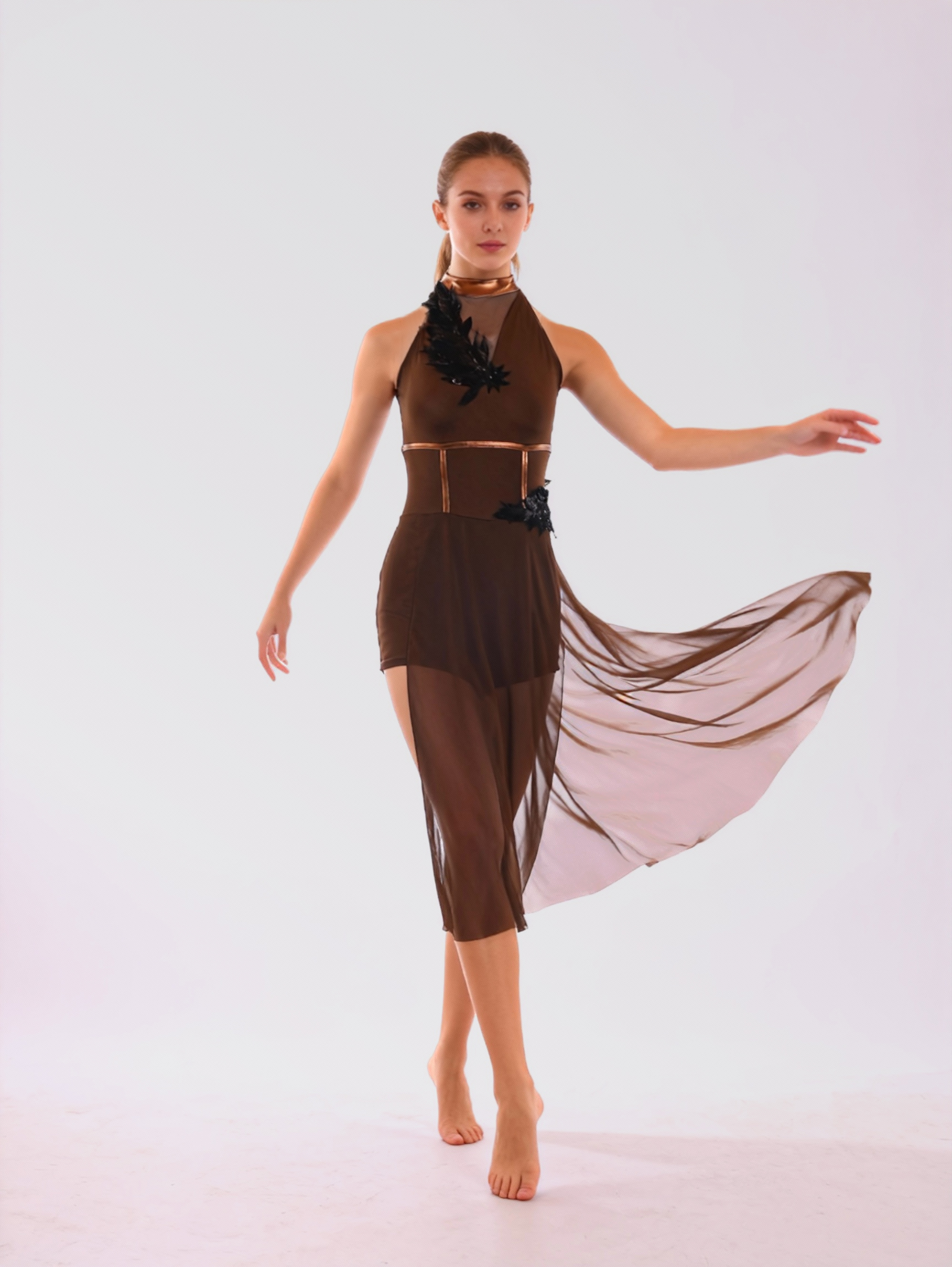
Dance-inspired costumes should be fluid and light, resembling the dance form. Costumes should be designed to complement movement. Costumes should be made of lightweight, stretchable fabrics to allow dancers to move without restriction. Design elements should be kept to a minimum to emphasize the core of the dance. Costumes should use beading in sparing amounts in order to enhance the dance. Mesh inserts should be used sparingly to allow the dance to be the focus and to allow for easy movement. Costumes should mainly use lightweight, stretchable fabrics. These allow for contraction and release movement without resistance. Dance research shows greater fluidity perception with the use of a certain type of fabric with a greater stretch and lower resistance. The type of fabric used influences the fluidity perception and the expressive range of the dancers.
Dancing has a psychological effect on the audience. Energy from music is transferred to the audience. Emotion and music are combined with dance to create a non-verbal form of communication. The color palette is determined by emotion, music, and narrative. Soft blues and lavenders create an emotional response of vulnerability and introspection. Use of warm colors create passion and emotional intensity. Colors have a psychological effect on people. Use of different colors to create a gradient is a way to mirror tempo changes in a dance and the use of richer tones can create dramatic pauses. The Journal of Performing Arts Medicine has shown that people largely agree on the use of certain colors and the emotions or themes relating to a dance. This makes the colors used in a dance a critical communication tool.
Lyrical-Specific Fit and Fabric
Performance Fabrics: Responsive Stretch and Breathability
Lyrical movement calls for responsive fabric construction to support not just stretching and flexibility, but also thoughtful recovery and temperature regulation. These knits employ 15-20% spandex to achieve full extension during développés and deep contractions, and coupled with breathable, moisture management constructions, dancers can focus on movement without degrading performance: 70% of dancers cite distracted or fatigued due to sweat-saturated fabric during performance. Critically, high-recovery materials preserve silhouette integrity after sustained pliés, lifts, or floorwork. Fabrics should avoid sagging and bunching to not disrupt movement lines. Stiff, low-recovery fabrics will limit spinal undulation and will not support the essence of lyrical movement and expression through the “suspension and collapse” technique.
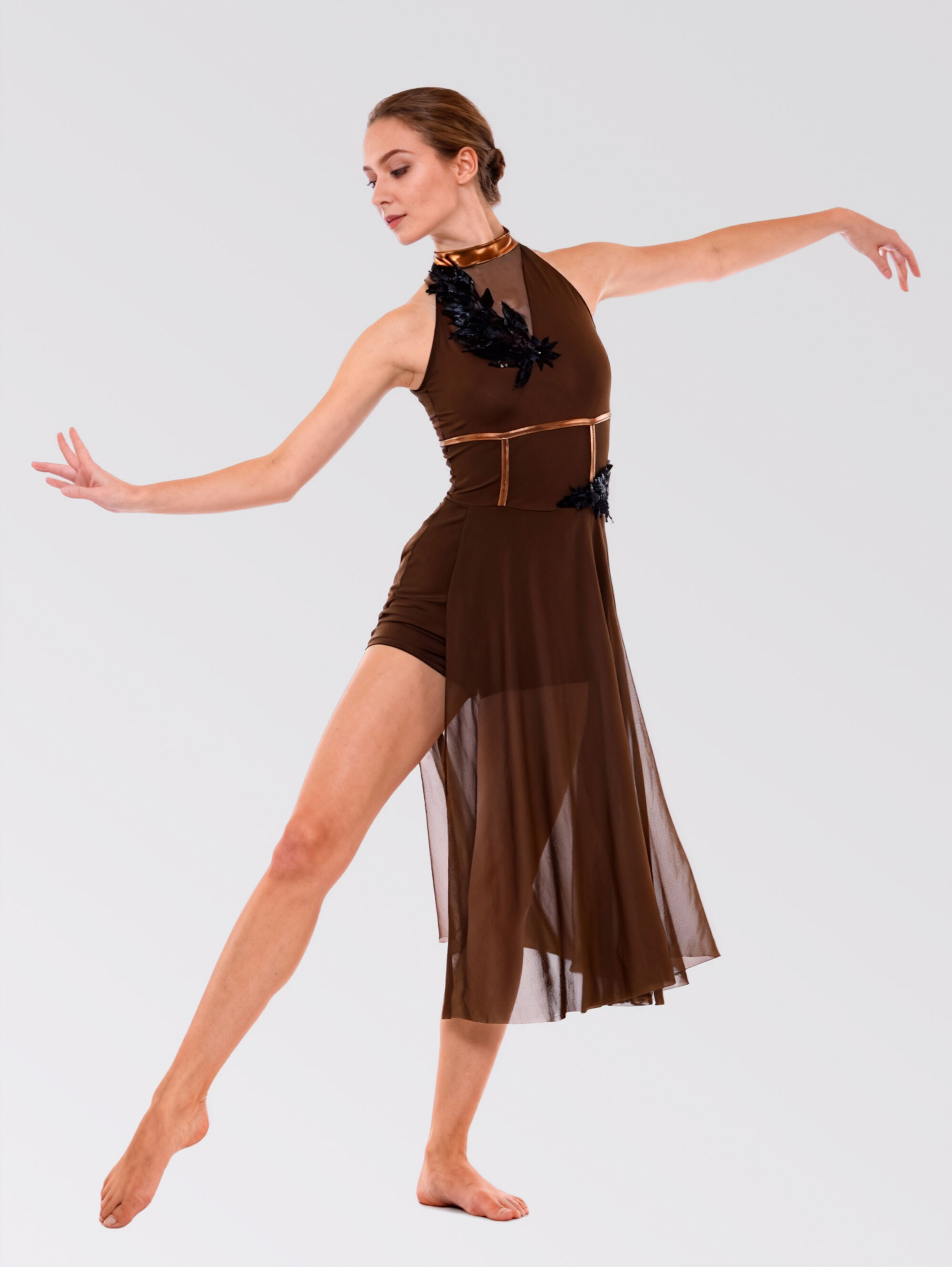
Lyrical movement requires fabrics that hold well during pliés, lifts, and floorwork without disturbing the fit and line of the movement.
Secure Fit: Expression and Emotional Connection to the Fabric
Fit must serve emotional authenticity—coverage should not restrict expression. Wide-set straps for leotards and tops transverse over shoulders to support secure anchoring during lifts and scapular mobility; deep scoop or keyhole backs articulate through extension without gapping. Flatlockseams for floorwork help to eliminate friction and chafing.
Fit Priority Impact on Performance
Torso compression Prevents fabric shifting during fast turns and directional changes
Gusseted crotch Allows full leg extensions and sustained développés without restriction
Contoured cups Provides adaptive support—no rigid banding that disrupts port de bras or breath-led phrasing
Necklines should frame the arms while not obscuring the jawline in profile view, as this is important for emotional expression. Always validate fabric fit through choreography not static poses to ensure integrity of fit through all transitions.
MAXIMUM STAGE W CONNECTIONS PERFORMANCE AND LIGHTING ATTIRE STYLES
Response to Lighting. Fabric Reflection, Drape, & Color Variations in Spotlights
Stage lighting is an art form in parallel to fabrics, so it is crucial to understand and optimize reflected light. Fabrics with matte finishes absorb and reflect hits at soft washes, whereas fabrics with satin weaves produce liquid light and reflect high levels of energy. The drape of the fabric influences how it moves in tandem with the dancer. For example, a pirouette may happen while draped in cascading fabric, or a pose may happen while the drape is stretching and clinging to the dancer. Tension is a poor fabric choice because of color change or how the fabric may turn translucent in lighting (lower Kelvin causing deep navy to present as black and high front light causing pale peach to present as translucent). Select fabrics for a performance and test the shape, the color, and the light in order to make an informed choice.
Vertical Zippered Back Closure and Seams
All structural components of fabrics are a result of the choreography, so be mindful of how the fabrics will reflect the choreography. For example, use flatlock seams to avoid the fabric abrading while rolling on the floor. Even the skirt length, Overall, using strategically chosen fabrics along with defined vertical lines to the body (e.g. seams or air) creates an optimal performance attire because it aligns with the physical and emotional aspects of the design and the dancer.
FAQ
What materials are best for lyrical dance costumes?
Preferred costumes materials include chiffon, lightweight jersey, and stretch mesh, as they provide fluidity and support for transitional dance movements.
How do colors affect lyrical dance performances?
Color defines and highlights emotional tones and musical phrases, playing a significant role in telling the story.
Why is stretch and recovery in fabrics critical for lyrical dance?
Stretch and recovery in fabrics is critical to lyrical dance because they allow the dancer to move freely and keep the fabric from sagging, maintaining a good fit.
What is important in designing costumes for lyrical dance?
Costume designing for lyrical dance requires a balance between flow, fit, and function to maintain movement and aesthetics.